
-
Welcome to CLO-Radio, a collection of podcasts exploring the trends, issues, ideas and learning methods employed by today’s top learning and development professionals.
Ice Cream Social [Media]
Once again, the folks at Common Craft have provided a creative and simple explanation for us . . . this time, Sachi and Lee Lefever use an ice cream factory in the mythical town of Scoopville to demystify social media. Enjoy!
Social Media in Plain English from leelefever on Vimeo.

(PS — My current favorite ice cream is Bruster’s butter pecan, filled with tons of salty toasted pecans. What’s yours?)
Del.icio.us link for 2008-05-30
-
Public speaking is tough enough when the audience is just your class. Try doing it as cameras flash, reporters scribble in their notebooks and one of the best orators in the United States, Barack Obama, judges you.
Juxtaposition

Note: The following article is based on a reflection exercise faculty members participated in at Poynter Institute’s Teaching Diversity Across the Curriculum conference last week in St. Petersburg, Fla. In small groups, we went to Listening Posts across the city, where we were instructed to observe a culture unlike our own. Dennis, Kym, Earnest and I went to Cho Lon Oriental Market and Mekong Vietnamese Restaurant on 34th Street.
If I were to use one word to describe what I saw and heard today, it would be juxtaposition. There was Trang brand coffee sitting next to the Café du Monde chicory coffee on the shelf in the Cho Lon Oriental Market. A TV showed the Vietnamese version of a telenovella, complete with Vietnamese subtitles, in the corner of Mekong Vietnamese Restaurant, right next door.
We saw something in the refrigerated section that intrigued us. It was something spiky, about the size of a spaghetti squash, in a mesh bag. Kym asked the proprietor what it was. The fruit was durian. It tastes wonderful, but it stinks, he warned us. He even told us of a hotel he went to that warned guests not to bring this fruit into the building. Kym was bold and bought some of the packaged stinky-fruit cookies on the shelf.
Do you want Edible Beef Blood? Try the frozen food section. Dried Black Fungus? That would be in aisle one next to the rice noodles. Pocky? Now, Pocky was something I’d heard of. That’s in the cookie and candy aisle.
Hello Kitty products sat next to Hello Panda items; none of my colleagues (including me) ever heard of Hello Panda.
In the restaurant, our friendly and helpful server had bleached blond spiky hair, pierced ears and multiple tattoos. Dennis and Earnest changed their initial orders based on our server’s recommendations after we started ordering. I tried the Hot and Sour Soup; it was sweet and spicy, and tasted quite a bit different from the soup of the same name at many Chinese restaurants. I think the lemongrass added a different flavor; I liked it a lot.
A couple came into Mekong with their toddler. “Would you like a high chair?” the server asked. “No, a booster seat would be fine,” was the reply. They ordered lunch. It came with scissors on the plate. As I got up to leave, I felt compelled to talk with them. “What kind of food did you order that needs scissors?” I asked. Both the husband and the wife laughed. “It’s to cut up the noodles for our son.” As I walked away from the table, I realized why they needed scissors. No knives are served with a meal in a Vietnamese (or any other Asian) restaurant.
Next time you’re in St. Petersburg, I’d definitely recommend stopping by Cho Lon Oriental Market and Mekong Vietnamese Restaurant on 34th Street. Take your time while you’re there and get to know the people. You’ll be glad you did.
Photo Credit: King of Fruits, originally uploaded to Flickr by Hanoi Mark
We’re All Journalists
At a Poynter Institute seminar kickoff today, about a dozen faculty members from Statesboro to San Luis Obispo and from Miami Beach to Toronto gathered to discuss “Teaching Diversity Across the Curriculum.” In Poynter’s words, “If tomorrow’s journalists are to report and write about a dynamic, increasingly diverse society, they’ll need guidance in the classroom. Whatever the course, there’s a place for teaching diversity — issues of race, ethnicity and gender — across the journalism curriculum.”
What do journalists stand for? Here are many of the ideas we brainstormed, in no particular order:
- Truth, justice & the American way
- Accuracy
- Ethics
- Fairness
- Completeness, over the long haul
- Honesty
- Self-awareness
- Integrity
- Mensch (a Yiddish term)
- Currency (being current)
- Relevance
- Accountability
- Power (as journalists, we have it and must use it wisely)
- Power of storytelling
- Understanding (by the journalist, of the people and their issues)
- Balance
- Principles
- Love of storytelling
- Love of writing
- Love of reading
- Transparency
- Empathy
Do you know an excellent story when you read one? What makes a story excellent? Here are some of our thoughts. Again, these are in no particular order:
- Transports you
- Universality
- Passion
- Rich characters that you care about (even if you don’t like them)
- It’s about people
- Tension à resolution
- Something new
- Gripping, through use of quotations and anecdotes
- Great words
- Anticipation
- Balance
- Visuals through wordcrafting
- Opens new vistas for us
- Structure
- Seamless scene setting
- Sense of time and place
- Compelling
- Imaginative / creative
- Permanence
- Discipline
Seminar leader Lillian Dunlap shared a formula with us, which I’ve graphically represented below.
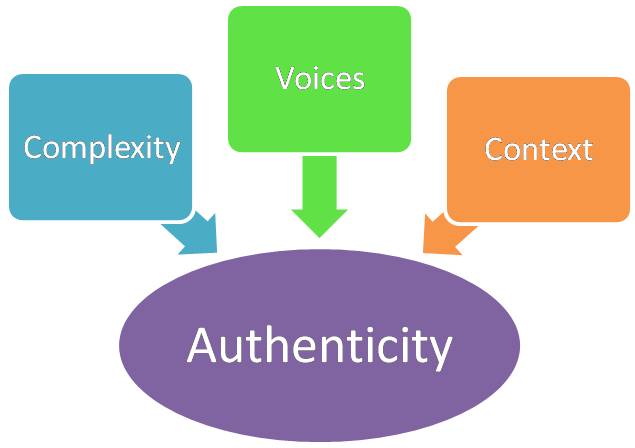
Stay tuned for more as this weeklong seminar progresses.
If Only I’d Known . . .

Back in the dark ages (two years ago), Todd Defren of SHIFT Communications wrote a pair of blog postings about the state of public relations education for undergrads. He wrote about The Trouble with Undergrad PR Programs and Fixing Undergrad PR Programs. Since I teach public relations at Georgia Southern University, this topic piqued my interest. I wondered if his thoughts and research from two years ago still held true today.
If you are a recent PR graduate (or current intern), I’d be quite interested to learn a few things:
- What’s something you learned in your PR education that you’re applying on a regular basis at work now?
- What’s something that you wish you had learned more about?
- And, what’s something that you didn’t really learn anything about in your classes that you’re expected to do on a (fairly) regular basis in your new career in PR?
Comments from recent grads and those who hire recent grads are quite welcome!
Photo titled “graduates” originally uploaded to Flickr by SuzanneK
A Little Surprise

Yesterday afternoon, I was at the Savannah Botanical Garden with my #2 son. He was helping me find flowers to take extreme close-ups of. We came across this calla lily. I was struck by how white the petal was. It wasn’t until last night when I was showing my husband my latest photos in Adobe Photoshop Album that I learned that there was a little surprise inside the lily. Can you see it? It made me smile.
News Release Pet Peeves
 On Twitter this evening, I noticed that Jeremy Pepper (host of Pop! PR Jots) had started a discussion about things that drive him crazy in news releases. The discussion started like this: “Press release pet peeves: For Immediate Release. Really!? Is that why you sent it out over the wire at that time? Or did you want a delay?”
I started wondering what some other news release pet peeves are.
As for me, mispelt misspelled words make me want to pull my hair out. If I find a misspelled word, it always makes me concerned that will be other, less obvious, mistakes, too.
So (here’s where the audience participation part comes in), what are YOUR pet peeves in press releases?
Drats! I Forgot to Include the Attachment . . . Again
 Ever forget to include an attachment when you sent an e-mail? I bet we all have. It can be frustrating at best and can help you lose a client at the worst.
Here’s my #1 tip that may help you avoid forgetting in the future:
Before you write anything in the message, attach the file.
I can’t tell you how many times I’ve used this little tip. Easy, no?
Facebook: wld u do this IRL?
What passes for normal on Facebook might never happen in real life. Would you literally write on a friend’s wall? Do you really want to be friends with someone you didn’t like when you were in class together? Do you poke people with your index finger often? Idiots of Ants (idiot savants?) created this great little video clip. Gotta love the British humour.
Thanks go to Donna Pappacosta‘s Twitter feed for pointing this clip out.