In our PRCA 3339 (Public Relations Publications) course this summer, blogs are now a part of our curriculum. Below you will discover what components will make up your blog:
Blog Post #2 :: CRAP: Contrast, Repetition, Alignment, Proximity
Pick any one of these four elements of good design. Define it, and explain its importance to good design. Remember to give credit to Robin Williams (the writer and graphic designer, not the comedian).
Due: TBA
Blog Post #3 :: Typography
What factors go into a designer’s decision of which typefaces (fonts) to use? What sizes are considered best for business cards? For brochures? Where can beginning designers go to find legal, free fonts to use? Also, post a link to directions (written by someone else) for installing a font.
Due: TBA
Blog Post #4 :: Segmenting Publics
Thinking about your client for your brochure, how would you segment the client’s publics? How will your brochure design be impacted by how the publics are segmented?
Due: June 30 before class
Two Additional Blog Posts
Write two additional blog posts about topics related to the content of PRCA 3339.
Final Blog Post :: Top Ten List
Using PowerPoint and SlideShare, post the top ten things you learned about public relations publications this semester. (More details will be shared on this post as we near the end of the semester.)
NOTE: This blog post will be graded separately from the rest of your blog. It will count in with your participation points.
Due: July 14 before class
Each blog post should contain:
At least 250 words
Hyperlinks to relevant websites
The category of Assignment
Relevant tags
Blog posts can be written informally and in the first person; that is, they don’t need to sound like a term paper. However, there’s still an expectation for proper grammar, spelling and capitalization. If you have questions about how informal is “too informal,” please let me know.
When I evaluate your blog at the end of the semester, I’ll be looking for:
linking: identify other PR blogs (use PR Open Mic or my blogroll in my Delicious bookmarks as starting points) and link to them. Respond to others’ posts. Become a part of the blogosphere. Blogging should not be lonely.
readability: brief & concise writing style, use of white space, bold characters, images, bullet points
Questions? Just let me know.
NOTE: Many thanks to Dr. V at Clemson University, who allowed me to use her blogging guidelines from her PRinciples class. They were so well-written that I made just a few tweaks for my own class. Dr. V knows that Blogs Matter.
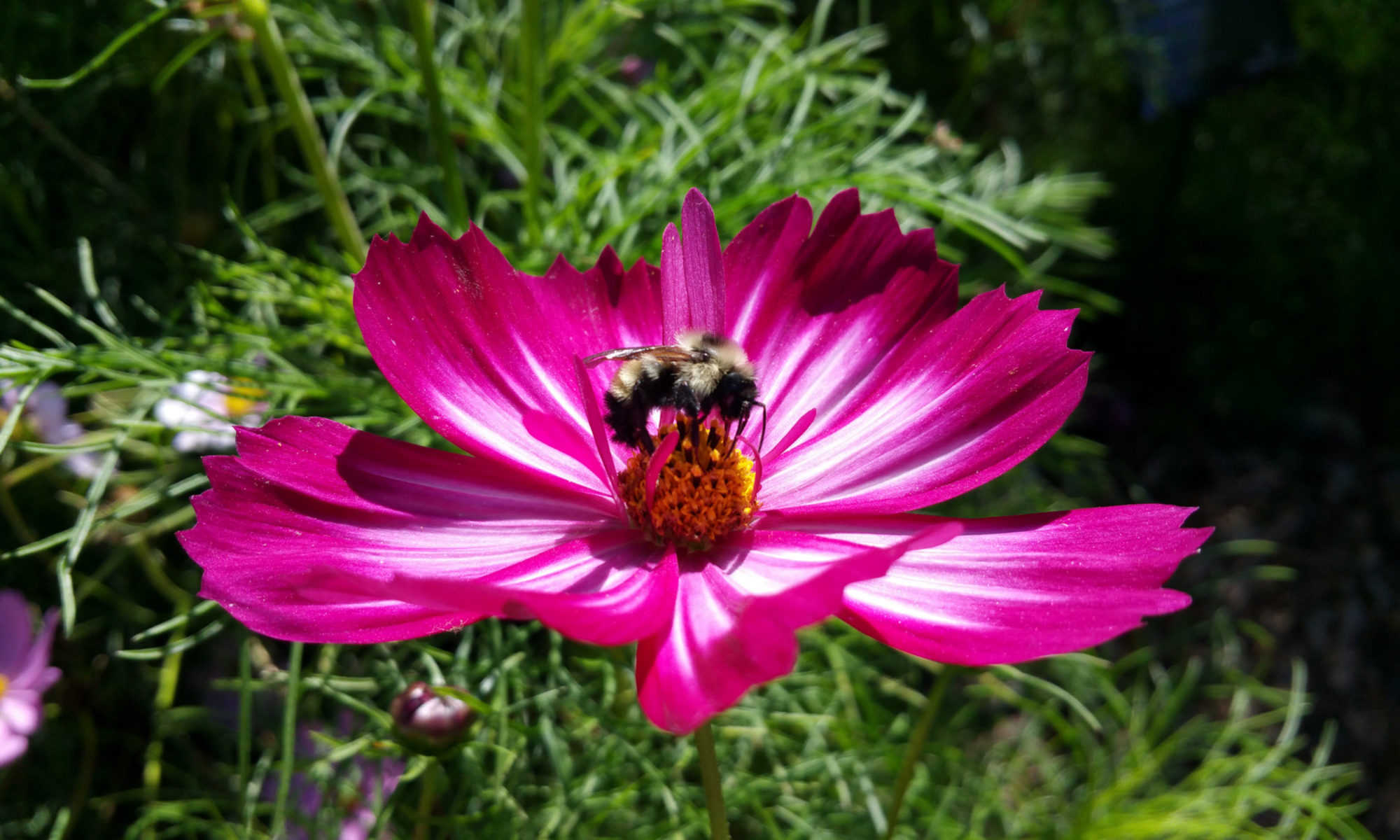
Here’s hoping these floral images brighten your day!
NOTE: Though I can take pics of flowers fairly well, I do not have a green thumb. Most of these flowers are from the Georgia Southern or Savannah Botanical Gardens.
So, you signed up for an account at WordPress, and you added an About page. Now what’s next?
FIRST: Let me know your blog address by replying to this post with a comment, sharing your name and blog address.
NEXT: How do you go about learning more to create a blog that reflects your personality and style?
Fortunately, WordPress offers many FAQ screencasts to help you with the step-by-step instructions. Here are a few of the best ones to help you get started on the right foot:
And though you may have a good handle on the technical aspects of blogging, remember that the technical side is only part of the blogging equation. Corinne Weisgerber, a professor at St. Edward’s University and fellow PROpenMic member, created this presentation for her Social Media for PR class. The emphasis? How blogging can help you create your personal brand online. Take a look. It’s worth the time.
Toward the end of 2008, Jeffrey Keefer and I used Google Docs to collaborate on guidelines for students to follow when writing in their blogs. What follows is the result of our collaboration, along with some of my personal spin added in. Though I wanted to create these guidelines as a guide for my students at Georgia Southern University, they may apply elsewhere as well.
Guidelines for Creating Blog Posts
Keep these general guidelines in mind when you post blog entries for our class:
Blogs are public, so write in a way that you will be comfortable with anybody reading your work (co-workers, friends, potential employers, parents, etc.).
Public blog posts may be indexed by Google and other search engines, so be mindful of your online identity you are creating.
Remember that Google may cache previous versions of your blog posts, even if you delete them. Google never sleeps.
Use an engaging title that captures your blog post and promotes reader interest.
Write about anything that interests you as it relates to our class content, even if there is no specific class assignment. Writers get better writing by writing.
Give credit where credit is due
If you use the direct words or lists of another blogger/writer, you MUST put the words in quotation marks.*
Cite the source by including the name and URL of the source; hyperlink to the source. OR use APA style.
If you paraphrase another blogger/writer, you MUST indicate where you found the information.*
Cite the source by including the name and URL of the source; hyperlink to the source. OR use APA style.
When using images in your blog posts, indicate where the images come from, either by linking back to the image source or providing a photo credit on the page. A great source for images is Flickr, especially when searched using CompFight.
*Note: Failure to cite sources in blog posts will result in the same penalty as failure to cite sources in traditional research papers or other writing projects. Consult with your professor if you are in doubt about how to attribute the sources.
Guidelines for Commenting on Blogs
Reading your classmate and colleagues’ blogs to will give you ideas for your own writing.
When you comment on another person’s blog, you can potentially start a dialogue and gain new social contacts.
Like blog posts themselves, you never know who will read your comments.
It is good practice reply to comments on your own blog.
We’re almost off and running in our Summer Semester classes at GSU. This semester, I’m teaching two classes; the classes, with hyperlinks to the syllabi, are listed below:
So that we can make the most of this semester, please (PLEASE) take some time to read through the blog posts I’ve included here. I promise you, it will be well worth your time. (How often do professors let you get inside their heads, letting you know their tips for success and their pet peeves?)
When communicating with me via e-mail (or Facebook), please put your course number (such as PRCA 3339) in the subject line to help me immediately identify who you are and frame your questions or comments. Do your best to write in full sentences, paying attention to standard English grammar and spelling. Always sign your e-mails with your first and last name, as your GSU e-mail address will not make that readily apparent to me.
When submiting an assignment in GeorgiaVIEW, always put your last name as part of the file name, and also include your name in the document itself. Papers submitted without your last name as part of the file name cannot earn full credit.
If an assignment is due in GeorgiaVIEW, the only way to get full credit for the assignment is to submit it in GeorgiaVIEW. (E-mailing an assignment to me can be risky; I receive 250+ e-mails a day, and there’s a chance I will not see it in my inbox.)
Last weekend, my husband surprised me with tickets to the NASCAR Nationwide race at Darlington, otherwise known as The Lady in Black. I’ll blog more about the experience later, but for now, here are some of the pictures I took:
Many thanks to my Twitter friends Nicole Hornig for connecting me with Nationwide driver Benny Gordon; the pit passes really made this a wonderful first NASCAR experience for me.
In today’s Introduction to Public Relations class, we watched a classic episode of the classic 1970s TV show “WKRP in Cincinnati” :: “Turkeys Away.” Though I paid to download the episode from iTunes, I just discovered it’s also available for free through Hulu.
In this episode, which was based on a botched promotion from a radio station in Atlanta, live turkeys dropped from a helicopter. Chaos ensues.
What can we learn about how NOT to do a promotion from Mr. Carlson’s fiasco? I’ll get the list started:
Communicate with your entire team before launching a promotional campaign (or a turkey).
Do your research! It’s best to learn ahead of time that turkeys don’t fly.
Get permission before doing a stunt.
Know what is considered news in your local market. Giving away turkeys for Thanskgiving wasn’t news. (But watching live turkeys plummet from a helicopter probably would be news.)
Brainstorm for what could possibly go wrong before you proceed with a promition.
In the public relations courses that I’ve taught over the years, it seems as though one of the biggest struggles for the students is writing using Associated Press style.
Why is learning AP style so important? PR practitioner Sandra Hernandez offers this:
PR writers really need to know the things that make them effective. I learned to write in AP in college, because it was necessary to pass the class. I continued to write in AP because I found that what I send to media had a better response rate when written in AP.
To help students learn more about AP style, I sought feedback from a variety of public relations practitioners and faculty members, trying to come up with a list of what PR writers REALLY need to know (cold, without even looking in the AP Stylebook) about AP style.
The most helpful advice came from colleagues on PR OpenMic, a social network for PR students, faculty and practitioners. (See the individual responses I received in the PR OpenMic PR Writing Discussion Forum.) Additional helpful advice came from colleagues on Twitter, including Kristie Aylett and Claire Celsi.
The most important (and sometimes confusing) parts of AP Style for PR writers are:
dates (especially when to abbreviate)
addresses (especially when to abbreviate)
names (when to use titles, etc.)
numerals (when to spell out, when to use digits)
datelines (which cities need to be identified with their states)
Many PR writers can also benefit from brushing up on standard grammar. My favorite site for general grammar advice is Mignon Fogarty’s Grammar Girl. Consider subscribing to Grammar Girl’s podcast through iTunes.
Final exams are approaching on college campuses around the world. Finals can be stressful, even for the most prepared students. Here are some tips to help you succeed:
Preparing for the Final
Find out what your entire final exam schedule is so that you’ll know how many finals you will have on each day.
Prepare a written schedule for yourself indicating when you will study for each test. Leave some time in your schedule for exercise and relaxation, too.
If the professor offers a study guide, use it.
If the professor offers a review session for the exam, go to it.
Know if the final is comprehensive (covering everything since the beginning of the semester or quarter).
Find out what kind of exam it will be. You’d study differently for a multiple-choice (Scantron) final than an essay (blue book) one.
If the final will be taken online, find out if you have to go to a specific computer lab on campus at a specific time, or if you’ll be allowed to take the final on your own computer. Also find out how many chances you will have to take the final. Assume it’s just one chance unless you hear differently from the professor.
If you have your previous exams available, scour the exams for things that you think will be on the final. Flag your notes by highlighting or using Post-It notes.
Don’t pull an all-nighter. (Though some people are successful with studying all night and then taking a test with no sleep, I wouldn’t recommend you try it for the first time on a final exam.)
Calculate your grades in the class. Determine what score you will need to get the grade you’re hoping for in the class. You may discover that you can’t possibly get an A, no matter how well you do on the final, but to get a B, you only need to get a few questions right.
If you’re an auditory learner, record yourself reading your notes aloud, then play the recording back several times. (You can use the free online service Utterli for this; simply register with Utterli and then call your assigned phone number with your cell phone to start the recording.)
If the exam is an open-book exam, this does not mean that you don’t have to study at all. In fact, one of the most challenging exams I ever took as an undergrad was an open-book essay exam.
Know what to bring with you to the final. Do you need a blue book? A Scantron? (And if you need a Scantron, which kind do you need?) A pencil? A pen?
Are food and drinks allowed in the classroom where your final will be? Sometimes, the rules are different for exam days than other days.
Even if you don’t usually wear a watch, take one with you to the final. It’s unlikely you will be able to look at your cell phone during the final.
During the Final
For a paper-based exam, read through the entire final exam before you start answering any questions at all. This way, you will know what you’re facing.
If the final is an online exam, find out if you can revisit questions, or if after you click past a question you cannot go back to it again.
If you’re using a Scantron and you skip a question to finish later, make sure you’re answering your questions next to the correct answers. (When I took my GRE to get into grad school, I skipped a question on the first page of the booklet, but never skipped a number on the Scantron. When I realized it, I only had 10 minutes to go back and put the answers with the correct questions. Talk about stress!)
Keep a close eye on the time you have allotted.
Some students benefit from answering the most difficult questions first, while others do better completing all the easier ones. Do what works for you.
After the Final
Do not share with other students what was on the final exam. In most universities, this is a violation of the honor code.
Now it’s your turn: What final exam tips do you have to share? Please let us know through your comments below (and also read the 20+ comments on the original blog post).