
"Les Nessman" with my infant son James and me (1990)

[Updated from a similar post in June 2010.]

As we start wrapping up our spring semester in Public Relations Applications class, it’s time to end the semester in my traditional way: by watching a classic episode of the classic late ’70s / early ’80s TV show “WKRP in Cincinnati” :: “Turkeys Away.”

According to the Internet Movie Database:

“[Station manager] Mr. Carlson is beginning to feel useless at the new formatted rock station so he decides to create a big Thanksgiving Day promotion. His idea? Get a helicopter, with a banner attached to it saying “Happy Thanksgiving From WKRP…” Then, based on a botched promotion from a radio station in Arkansas, live turkeys are dropped from a helicopter. Chaos ensues.”

Take 20 or so minutes to watch the episode below, keeping in mind what you’ve learned in COMM 2322 during the semester.

So what can public relations students learn about how NOT to do a promotion from Mr. Carlson’s fiasco? I’ll get the list started:

  1. Communicate with your entire team before launching a promotional campaign (or a turkey).
  2. Do your research! It’s best to learn ahead of time that turkeys don’t fly.
  3. Get permission before doing a stunt.

What would you add to this list? Add your thoughts in the comments below.
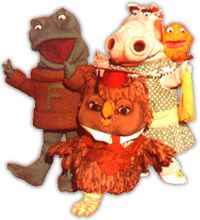
 

Image Credit: "New Zoo Review"

It’s hard to believe the semester is almost over, but it most certainly is — at least if we can trust our calendars.

As a way of reviewing what we covered and learned in COMM 4333 (Writing for PR and Advertising), each student will:

  • Choose a toy animal from a basket in class.
  • Name the animal.
  • Write the letters of the animal’s name down the left margin of a paper.
  • Come up with something we discussed in COMM 4333 that starts with each letter.
  • Reply to this blog post with a comment including the animal’s name & what they learned. Put a star/asterisk in front of the most important thing learned. (NOTE: Copy the comment before you submit it, and save it in a Word doc.)
  • Send a tweet with the most important thing learned and the class hashtag (#COMM4333)

After each student is done with this, we’ll go around the room and each student will share his/her starred item — the key learning.

Any why is  ”New Zoo Revue” in the title of this post? It was among my favorite childhood TV shows. (It’s a little painful watching the production values in the show now, but I loved it as a child.)


Image Credit: "New Zoo Review"

It’s hard to believe the semester is almost over, but it most certainly is — at least if we can trust our calendars.

As a way of reviewing what we covered and learned in SPC 4350 (Social Media for PR and Advertising), each student will:

  • Choose a toy animal from a basket in class.
  • Name the animal.
  • Write the letters of the animal’s name down the left margin of a paper.
  • Come up with something we discussed in SPC 4350 that starts with each letter.
  • Reply to this blog post with a comment including the animal’s name & what they learned. Put a star/asterisk in front of the most important thing learned.

After each student is done with this, we’ll go around the room and each student will share his/her starred item — the key learning.

Any why is  ”New Zoo Revue” in the title of this post? It was among my favorite childhood TV shows. (It’s a little painful watching the production values in the show now, but I loved it as a child.)


Though I love getting feedback from all sorts of people, this short survey is designed specifically for students in my public relations courses this spring. I will share the results on my blog by the end of April.


If you want to share a presentation you’ve created and uploaded to SlideShare (or one that you found on SlideShare), it’s surprisingly simple to embed the presentation into your WordPress blog. Here are the four steps:

  1. On the presentation’s page in SlideShare, click on the WordPress logo, which is to the left of the presentation.
  2. Copy the code for WordPress.com hosted blogs. It will look something like this: 
  3. Paste the SlideShare code into your blog post; use the Visual Editor, not the HTML Editor.
  4. Save your blog post draft, then preview it. The presentation should appear like the one created by my COMM 4333 class below. If it looks like you expected to, publish your post.
That’s all there is to it. Simple, right?


Show Up Unprepared? Then You’re a Loser*.

On April 6, 2011, in teaching, by Barbara Nixon

Image Credit: "Loser" by Barbara Nixon

Be prepared for a short rant.

As has happened more than once this semester, students have shown up for class unprepared. Though I don’t like it, I halfway expect a small handful to not have completed the assignment that they were given. But this time, I was taken aback. In a class of 20, only four (FOUR!) had listened to the assigned podcast and written about it before class time. (NOTE: They should have listened to the podcast last week and blogged about their reactions no later than midnight on last Saturday night.)

When only 20% of a class is prepared to discuss a topic, the entire class loses. Many are disappointed, including those who WERE prepared for the discussion and their professor. And more importantly, learning is diminished.

Part of my job as a college educator is preparing students for careers after college. So how does it affect you, Dear Student, when you choose not to prepare yourself before a meeting? Here are a few ways:

  • You lose time. . . your own time and the time of others who must regroup because you did not have your deliverable ready on time.
  • You lose the respect of others who were counting on you, your co-workers, your boss, your client . . .
  • You may lose the business of a client who was counting on you.
  • If it happens more than once, you may even lose your job.

In what other ways does showing up unprepared affect individuals and organizations? I’d love your input. And thanks for “listening” to my rant.

[* UPDATE: One of my students from another university noted via Twitter that it looks like I am calling students "losers" in a public setting. I can definitely see how that might appear, especially if reading only the title of the blog post. My intent in this post wasn't to name-call or embarrass, but instead to highlight something that's relatively easy to fix and that will definitely impact students' careers once they leave the confines of a college classroom.]


[Updated from a blog post from February 2010]

As PR students are nearing the end of their college careers and beginning their job searches, one of the most powerful online tools for them is the business networking site LinkedIn. Creating a profile in LinkedIn is a requirement in my Communication Seminar class and is recommended for ALL my PR students.

What’s LinkedIn? In the site’s own words,

“Your professional network of trusted contacts gives you an advantage in your career, and is one of your most valuable assets. LinkedIn exists to help you make better use of your professional network and help the people you trust in return. Our mission is to connect the world’s professionals to make them more productive and successful. We believe that in a global connected economy, your success as a professional and your competitiveness as a company depends upon faster access to insight and resources you can trust.”

So far, I’ve used LinkedIn to:

  • research companies we are discussing in class
  • ask questions of other public relations professionals
  • connect with colleagues from previous jobs
  • write recommendations for current and former colleagues
  • find guest speakers for classes
  • share my professional background with students who only know me as a professor

LinkedIn provides some helpful advice for college students.  In summary, the advice is:

  1. Get Started
  2. Go Pro
  3. Be Passionate
  4. Grow Your Network
  5. Find Opportunities
  6. Nail the Interview

I’ve embedded the Get Started video below. You can find the rest of them via the links above.

Also, soon-to-be grads should take a look at the following:

  • Chris Brogan’s 19-page eBook “Using the Social Web to Find Work.” (Though it was written more than a year ago, much of the advice still holds true.) Visit Chris’ site and scroll down to his fifth paragraph for the PDF. (I chose not to link to it directly because I want you to visit his site first. ) Chris includes many, many tips on using LinkedIn and other sites.
  • Gini Dietrich’s blog post “Using Social Media to Find a Job.” Be sure to read the comments in addition to the post itself.

When you set up your profile in LinkedIn, consider also doing the following:

  • Create a custom URL for your profile to make it easier for people to find you (and because it will look nicer on your resume)
  • Include a good headshot photo of yourself, looking as professional as possible. No pictures where you can see that you cropped out (most of) the person next to you.
  • Add Applications to LinkedIn, such as a feed from your blog or SlideShare. Only add Twitter if 100% of your tweets are ones that you’d want a potential employer to read.

How do YOU use LinkedIn? How have you benefitted from it? Please share your thoughts as a comment below.

barbara_is_listening


SPC 4350 & COMM 4633

If you chose to have a client in this class, for your final project, you will analyze your client’s organization from a social media perspective and create a mini-campaign for it.

This project is worth a total of 500 points of the 1000 available; the written portion is worth 400, and the class presentation is worth 100.

Social Media Strategy: Use the POST process from Groundswell to guide you as you create a social media strategy for your organization. This should be a general strategy that will carry your organization through several campaigns or projects over the course of the next year. Part of this strategy will also include creating a social media policy for the employees of your organization, or critiquing the existing policy if there is one in place.

  • Background
    • An overview of your organization and what it does
    • A brief history or timeline of your organization
    • Based on Grunig & Hunt’s models of PR, which model is your organization using? Provide examples.
  • People
    • Assess the social activities of your client’s customers. (What sites do they currently use? Why do they choose these sites?)
  • Objectives
    • Decide what you want to accomplish via social media
    • Be specific. Use SMART objectives, ones that are specific, measurable, attainable, relevant and time-bound.
  • Strategy
    • Plan for how relationships with your customers will change
  • Technology
    • Decide which social tools you will use (a Facebook page, a Groupon coupon, specials for FourSquare mayors, etc.). Explain why you chose each tool. (For this portion of the project, you do not need to provide samples.)
  • Social Media Policy
    • If the client already has a social media policy, critique it and make recommendations for changes. (If you have no changes recommended, explain why you believe the policy is a good one as is.)
    • If the client does not already have a social media policy, use the Policy Tool for Social Media, create a draft of one to review with your client. (For the purposes of this class project, you do not have to review the draft with the client.)

Mini-Campaign:

  • Develop & conduct a mini-campaign (using social media) for your organization. For this mini-campaign, use the standard RACE model:
    • Research
    • Action
    • Communication
    • Evaluation
  • Include a budget.
  • Include samples of all the types of social media that you plan to use. For example, if you are recommending that your client has a podcast, provide at least one complete episode, along with a description of upcoming episodes. If you recommend a Groupon coupon, provide the image(s) and text make up the coupon. If you recommend a Facebook page, mock up a page.
  • Some of the information in your mini-campaign may overlap with your Social Media Strategy. This is to be expected, as you will create the campaign based on the strategy.
Image Credit: grandmaster FLAX ~ II
 
iBlog by PageLines

Switch to our mobile site